
Parquet en Bois Technique
Parquet en bois technique de spécification pour résidences de direction, suites hôtelières et bureaux haut de gamme à Accra et Kumasi — posé selon les directives NWFA avec contrôle d'humidité du bois et du support qui maîtrise le tuilage et l'écartement que l'humidité de 81-83% provoque dans le bois massif. Floors GH, le porte-étendard premium depuis 1972.
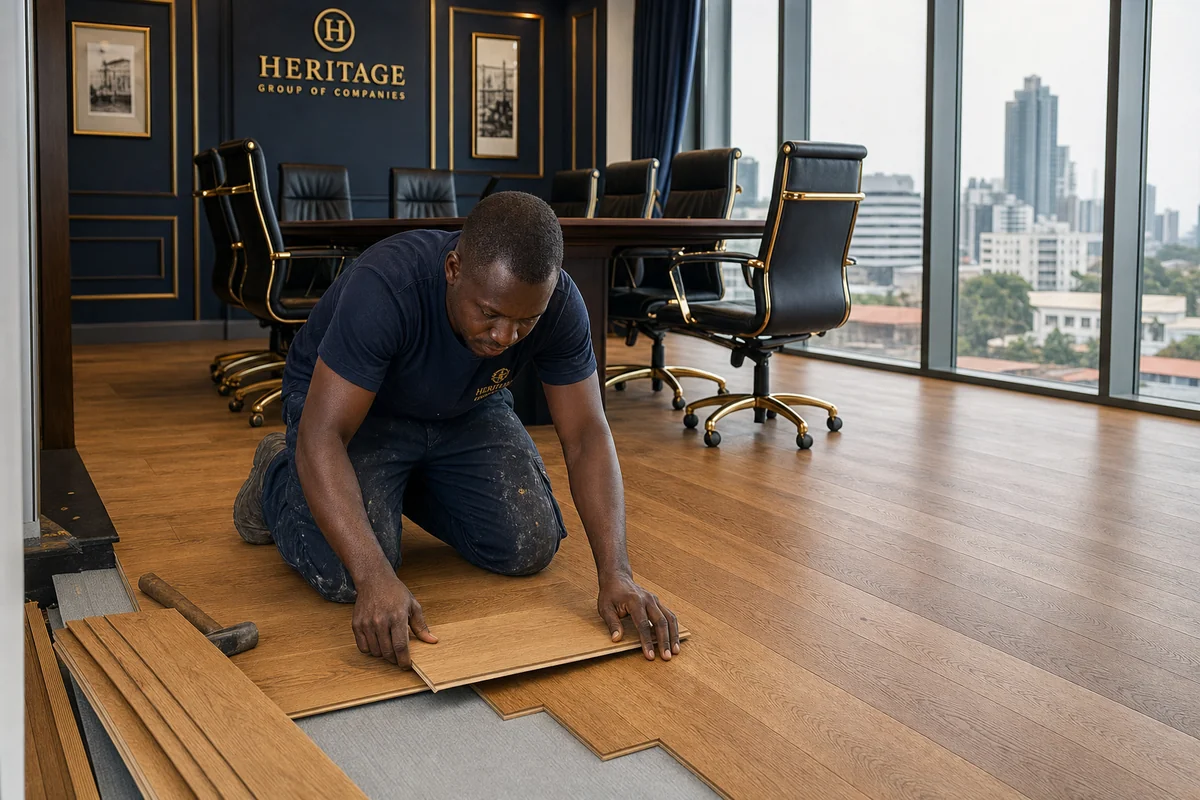
Le parquet en bois technique est un sol multicouche dans lequel une couche d’usure en bois dur séché au four est liée à un noyau contrecollé dimensionnellement stable, offrant le rendu visuel du bois massif tout en résistant au mouvement d’humidité qui limite le bois massif en climat tropical. Posé selon les directives de la National Wood Flooring Association (NWFA), avec une couche d’usure permettant plusieurs cycles de ponçage-rénovation sur des décennies, c’est la spécification bois qui tient dans l’humidité. Floors GH détient cette spécialité comme porte-étendard premium de l’empire depuis 1972.
Pourquoi le bois bouge dans l’humidité du Ghana — et comment nous le maîtrisons
Le bois est hygroscopique : il gagne et perd de l’humidité avec l’air ambiant et, ce faisant, il gonfle et se rétracte. Dans l’humidité relative persistante de 81–83%, un sol qui absorbe de l’humidité tuile et un sol qui sèche s’écarte — et ce mouvement, non l’essence ni la finition, est la première cause de défaillance d’un parquet dans ce climat. Le bois massif bouge le plus ; les défaillances apparaissent en lames tuilées, joints ouverts entre les planches et gondolement en périphérie.
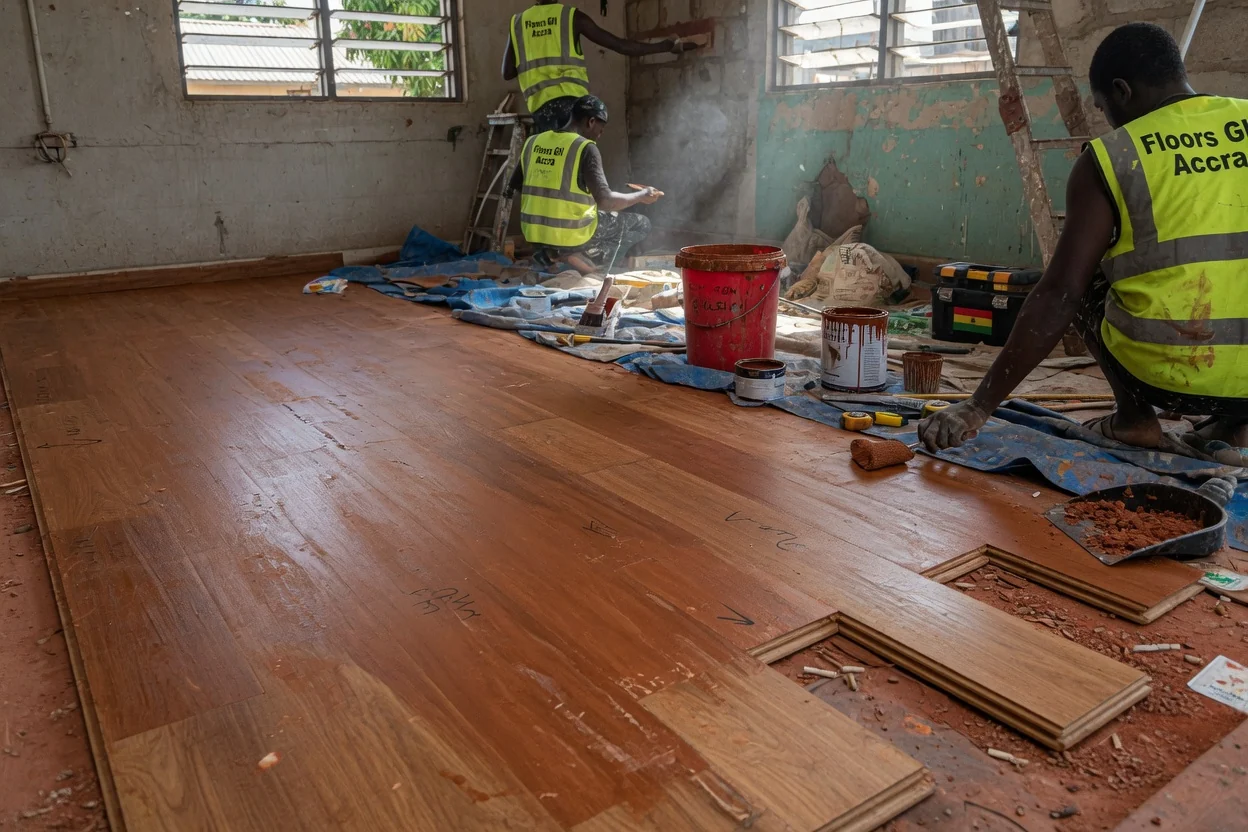
Nous maîtrisons l’humidité comme discipline d’ingénierie primaire. Avant d’ouvrir une lame, nous mesurons le taux d’humidité du bois du parquet et testons le support, acclimatons le matériau aux conditions d’usage de la pièce selon les directives NWFA, gérons la vapeur sur béton, et spécifions une construction technique (non massive) dont le noyau contrecollé résiste au mouvement. Cette discipline d’humidité — non la qualité du bois — est ce qui fait tenir un parquet au Ghana.
Les systèmes de bois technique que nous posons à Accra
Chêne européen technique
Le standard institutionnel intermédiaire — stable, rénovable et disponible dans un large registre de finitions pour salles de conseil, résidences de direction et suites hôtelières haut de gamme.
Placages tropicaux et exotiques (noyer, teck, acacia)
Essences haut de gamme dont la densité et la stabilité naturelle conviennent aux applications côtières et à forte humidité, spécifiées quand le cahier des charges demande du poids matériel et du caractère.
Larges lames et motifs (point de Hongrie, bâtons rompus)
Lames techniques larges et à motif parquet de spécification posées selon la méthode NWFA, avec maîtrise de la dilatation sur grands champs.
Finitions huilées et vernis UV
Vernis durci aux UV pour une durabilité à faible entretien, ou finition huilée pour un rendu naturel qui se ravive par ré-huilage plutôt que par ponçage complet — choisi selon le cahier d’entretien.
La doctrine d’humidité du bois
| Contrôle | Ce qu’il gère | Pourquoi il décide du sol |
|---|---|---|
| Taux d’humidité du bois | Équilibre entre la lame et l’air d’usage | La lame doit atteindre l’humidité de la pièce avant fixation, sinon elle bouge ensuite |
| Acclimatation NWFA | Conditionnement aux conditions de vie du bâtiment | Les directives NWFA acclimatent aux conditions d’usage, non à un nombre de jours fixe |
| Contrôle d’humidité du support | HR/humidité de surface sur béton ; humidimètre sur bois | Un support non testé pousse l’humidité dans le sol et provoque le tuilage |
| Noyau technique contrecollé | Stabilité dimensionnelle vs bois massif | Résiste au tuilage, à l’écartement et au gauchissement que l’humidité impose au massif |
Comment nous posons un parquet en bois technique
- Contrôle d’humidité et étude — taux d’humidité du bois du parquet + HR/humidité de surface du support selon la fourchette NWFA avant toute ouverture.
- Acclimatation selon les directives NWFA — matériau conditionné sur site aux conditions d’usage de la pièce, humidité relevée quotidiennement.
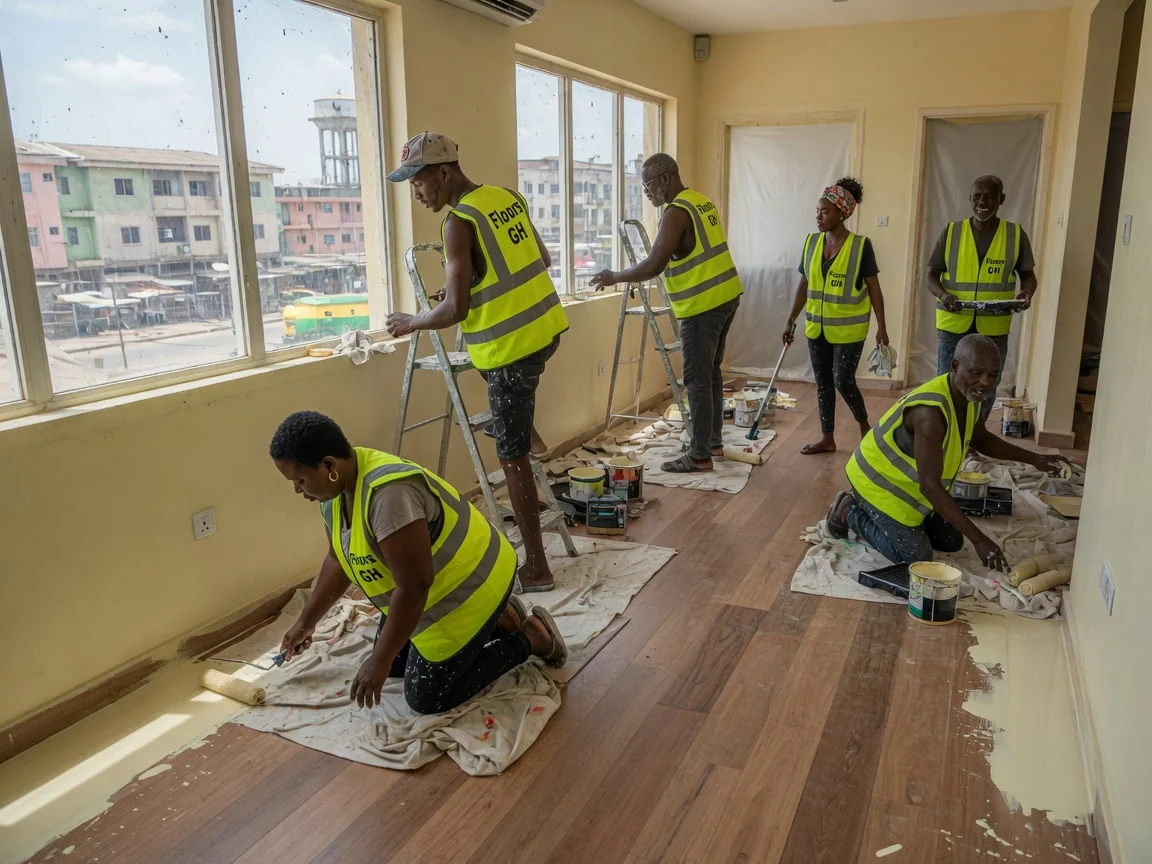
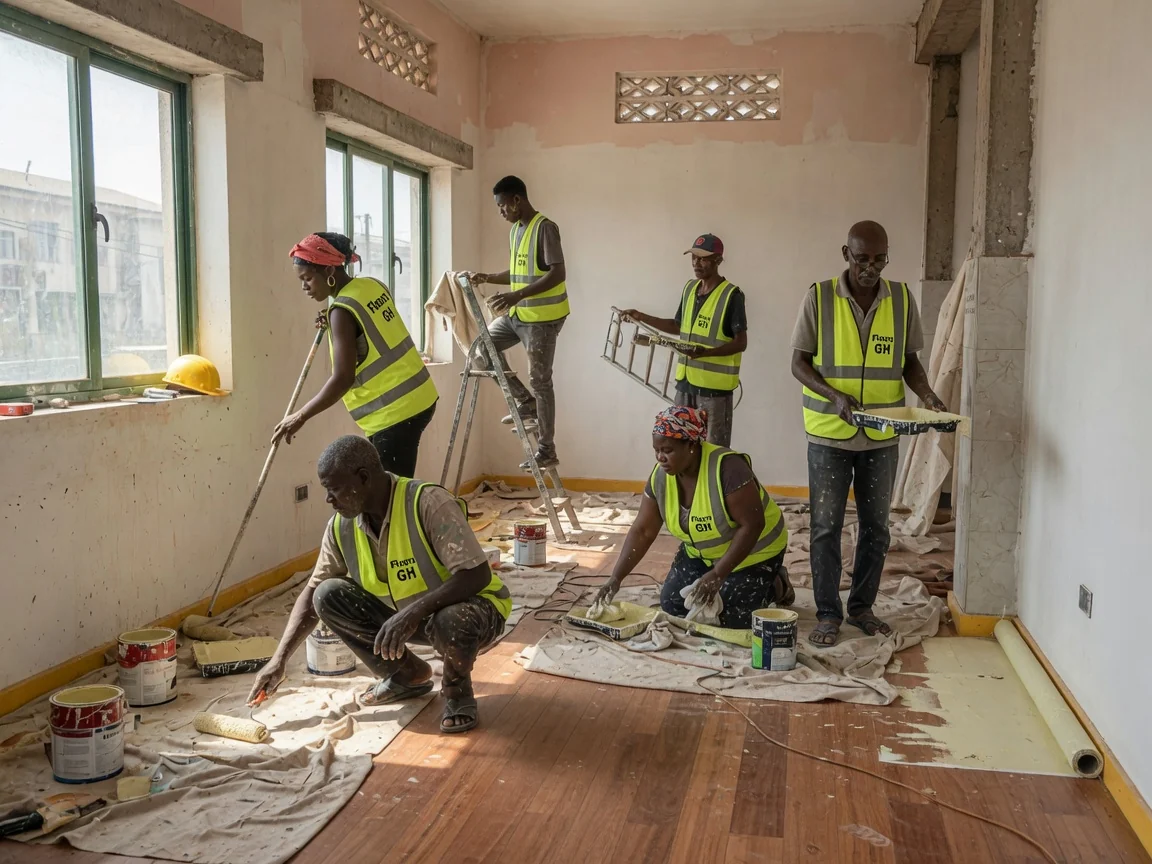
- Préparation du support et gestion de la vapeur — plat selon la tolérance NWFA, autonivelant si nécessaire, pare-vapeur/sous-couche sur béton.
- Pose, joints de dilatation et finition — flottante/collée/clouée selon le support, joints de dilatation à chaque mur et seuil, finition inspectée et remise avec un protocole d’entretien.
Comparaison des options de parquet pour le climat tropical
| Système | Idéal pour | Stabilité à l’humidité | Cycles de rénovation |
|---|---|---|---|
| Bois technique | Salles de conseil, résidences de direction, hôtellerie | Élevée — noyau contrecollé | 1–3 (selon couche d’usure) |
| Bois massif | Cahiers patrimoniaux uniquement, avec contrôle d’humidité strict | Faible — bouge avec l’humidité | Plusieurs, mais fort risque de tuilage |
| Stratifié | Aménagement économique / temporaire | Modérée (pas de bois véritable) | Aucun — non rénovable |
| Parquet patrimonial | Restauration de blocs de bois d’origine | Gérée par conservation | Rénovation selon pratique NWFA |
Ce qui influe sur le coût
- L’essence et l’épaisseur de la couche d’usure (chêne européen jusqu’aux exotiques tropicaux ; 3 mm à 6+ mm)
- Le système de finition (vernis UV, huilé, ou vieilli/patiné sur mesure)
- L’état du support et toute remise en état d’humidité, mise à niveau ou gestion de vapeur requise
- Le motif de pose (droit, point de Hongrie, bâtons rompus) et la surface
- La présence d’un chauffage au sol ou la dépose d’un sol existant
Chaque devis suit une étude de site et un contrôle d’humidité — aucun tarif fixe n’est donné avant de tester le support.
Applications à travers le Ghana
- Salles de conseil et suites d’étage de direction
- Pièces de vie principales, salons familiaux et suites parentales de résidences de luxe à Accra et dans les quartiers résidentiels
- Suites d’hôtels de charme et de résidences de direction où l’expérience client dépend du registre matériel
- Résidences côtières où les placages tropicaux surpassent les essences tempérées
- Intérieurs résidentiels et hôteliers haut de gamme à Accra, Cantonments et East Legon au Ghana
Zones desservies
Floors GH pose du parquet en bois technique à Accra et à travers le Ghana — de Cantonments et Trasacco à Kumasi et East Legon.
Services connexes
- Restauration de parquet patrimonial — conservation des sols à blocs de bois d’origine
- Pose de marbre — pour les transitions hall-salle de conseil
- Béton poli — pour les surfaces d’arrière-boutique zonées
- Chape autonivelante — préparation du support avant la pose du bois
Questions fréquemment posées
Pourquoi un parquet tuile-t-il ou s’écarte-t-il au climat tropical ? Parce que le bois bouge avec l’humidité. Dans l’humidité relative persistante de 81–83%, une lame qui absorbe de l’humidité gonfle et tuile ; une lame qui sèche se rétracte et s’écarte. Les remèdes sont l’acclimatation selon les directives NWFA aux conditions d’usage de la pièce, le contrôle d’humidité du support avant la pose, la gestion de la vapeur sur béton, et une construction technique (non massive).
Le bois technique est-il meilleur que le bois massif en climat tropical ? Oui. Le bois technique lie une couche d’usure en bois véritable à un noyau contrecollé dimensionnellement stable, il résiste donc au tuilage, à l’écartement et au gauchissement que les variations d’humidité imposent au bois massif. Le rendu visuel est identique ; la stabilité dimensionnelle est bien mieux adaptée à l’humidité.
Un parquet en bois technique peut-il être poncé et rénové ? Oui — le nombre de cycles dépend de l’épaisseur de la couche d’usure : une couche de 3 mm permet environ un ponçage-rénovation, 4–6 mm en permet deux, selon la pratique de rénovation NWFA. C’est l’avantage clé sur le stratifié, qui ne peut pas être rénové du tout.
Combien coûte un parquet en bois technique ? Le devis se fait sur étude — le coût varie selon l’essence et l’épaisseur de la couche d’usure, le système de finition, l’état du support et toute remise en état d’humidité, et la surface. Nous ne donnons jamais de tarif fixe avant d’avoir mesuré l’humidité et étudié le support ; demandez une étude de site.