
Terrazzo Décoratif
Terrazzo décoratif de spécification à Accra et Kumasi — terrazzo cimentaire et époxy posé selon les méthodes NTMA, avec bandes de séparation, ponçage-polissage diamant et résistance à l'abrasion ASTM C779 sur un support correctement préparé. Floors GH, le porte-étendard premium depuis 1972.
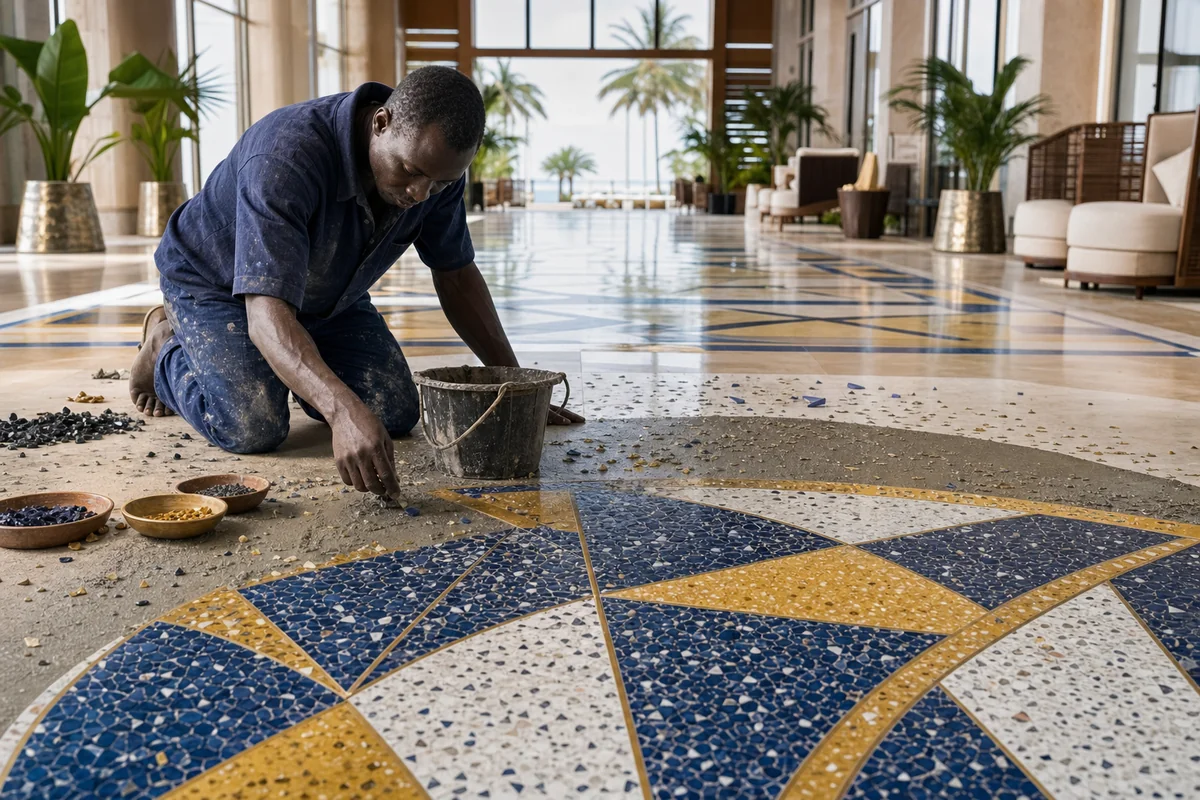
Le terrazzo décoratif est un sol composite coulé en place dans lequel un granulat sélectionné — éclats de marbre, verre concassé, nacre ou matériau sur mesure — est lié dans une matrice cimentaire ou époxy, poncé à plat après durcissement, puis poli progressivement jusqu’au brillant spécifié. Le résultat est un champ monolithique sans joint, composé individuellement pour chaque commande et posé selon les méthodes de la National Terrazzo & Mosaic Association (NTMA). Floors GH détient cette spécialité comme porte-étendard premium de l’empire depuis 1972.
Pourquoi le terrazzo réussit ou échoue sur son support dans le climat tropical
Un terrazzo est un monument continu coulé sur une dalle — sa réussite se décide donc par le support qui le porte. Une dalle mal préparée, inégale ou mobile se répercute directement à travers le revêtement sous forme de fissures et de décollement, et aucun choix de granulat ou de polissage ne le rattrape. La discipline qui fait durer un terrazzo, c’est la préparation du support et le calepinage des bandes de séparation, non la composition décorative.
Nous traitons le support comme le contrôle d’ingénierie primaire. La dalle réceptrice est poncée ou grenaillée jusqu’à un profil sain et mécaniquement accroché, les fissures et vides sont comblés, la planéité est vérifiée selon ASTM E1155, et les bandes de séparation sont posées selon le calepinage recommandé par la NTMA afin que le retrait et le mouvement du support se localisent à la bande plutôt que de fracturer le champ. Ce travail de fond — non le granulat — est ce qui fait tenir un terrazzo pendant des décennies dans ce climat.
Les systèmes de terrazzo décoratif que nous posons à Accra
Terrazzo cimentaire (ciment Portland)
Le système traditionnel collé ou sur couche de désolidarisation, gâché et mis en œuvre selon le dosage NTMA. Plus épais, idéal pour les grands champs institutionnels, la restauration patrimoniale et les registres traditionnels.
Terrazzo époxy (matrice résine)
Un système plus fin, à durcissement rapide, peu perméable, avec une clarté de granulat plus vive et une gamme de teintes plus large — adapté aux champs commerciaux, aux vitrines phares et aux budgets d’épaisseur serrés où la résistance chimique compte.
Terrazzo à bandes de séparation et granulat sur mesure
Bandes en laiton, zinc ou aluminium posées selon un motif dessiné, avec granulat sur mesure (incrustation de nacre, verre concassé recyclé, pierre régionale) pour les commandes où le sol est l’élément architectural principal.
Restauration de terrazzo patrimonial
Re-ponçage, re-coulage et approvisionnement en granulat d’époque pour les terrazzos du milieu du siècle arrivés en fin de cycle, préservant le registre d’origine tout en remédiant à la défaillance du support.
La méthode NTMA et les standards
| Référence | Ce qu’elle régit | Pourquoi elle décide du sol |
|---|---|---|
| Méthodes NTMA | Dosage de la matrice, calepinage des bandes, séquence ponçage-polissage | La méthodologie de pose reconnue pour le terrazzo cimentaire et époxy |
| ASTM C779 | Résistance à l’abrasion des surfaces horizontales béton/terrazzo | Vérifie la performance à l’usure qu’un sol public à fort trafic doit tenir |
| ASTM E1155 | Planéité du sol (nombres FF/FL) | Le plan récepteur dont un champ monolithique coulé a besoin avant toute matrice |
| Calepinage des bandes | Lignes de rupture maîtrisées en bord de panneau | Localise le retrait et le mouvement du support à la bande, évitant la fissuration du champ |
Comment nous posons un sol en terrazzo décoratif
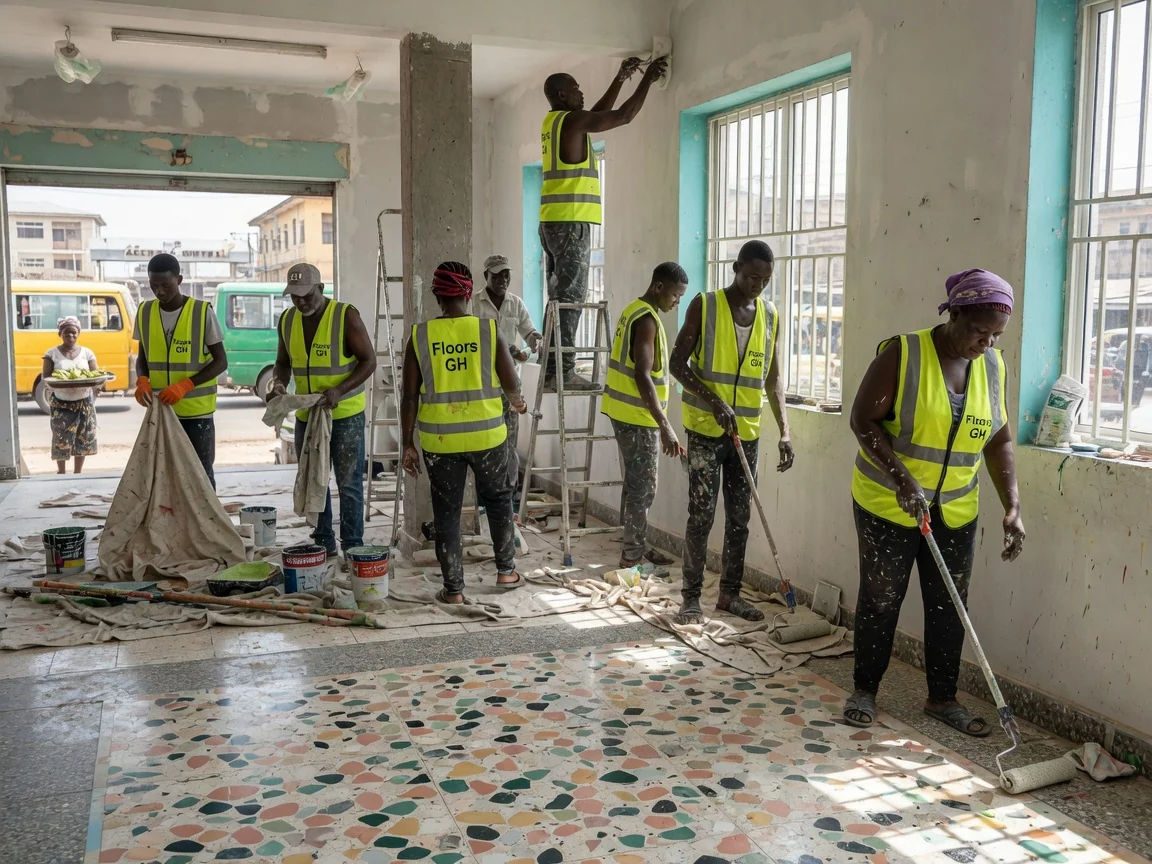
- Préparation du support et vérification de la planéité — ponçage/grenaillage jusqu’à un profil sain et accroché ; comblement des fissures et vides ; vérification de la planéité selon ASTM E1155.
- Validation des granulats, bandes et motif — panneaux d’essai à la densité convenue ; bandes posées selon le calepinage NTMA et nivelées à la hauteur finale.
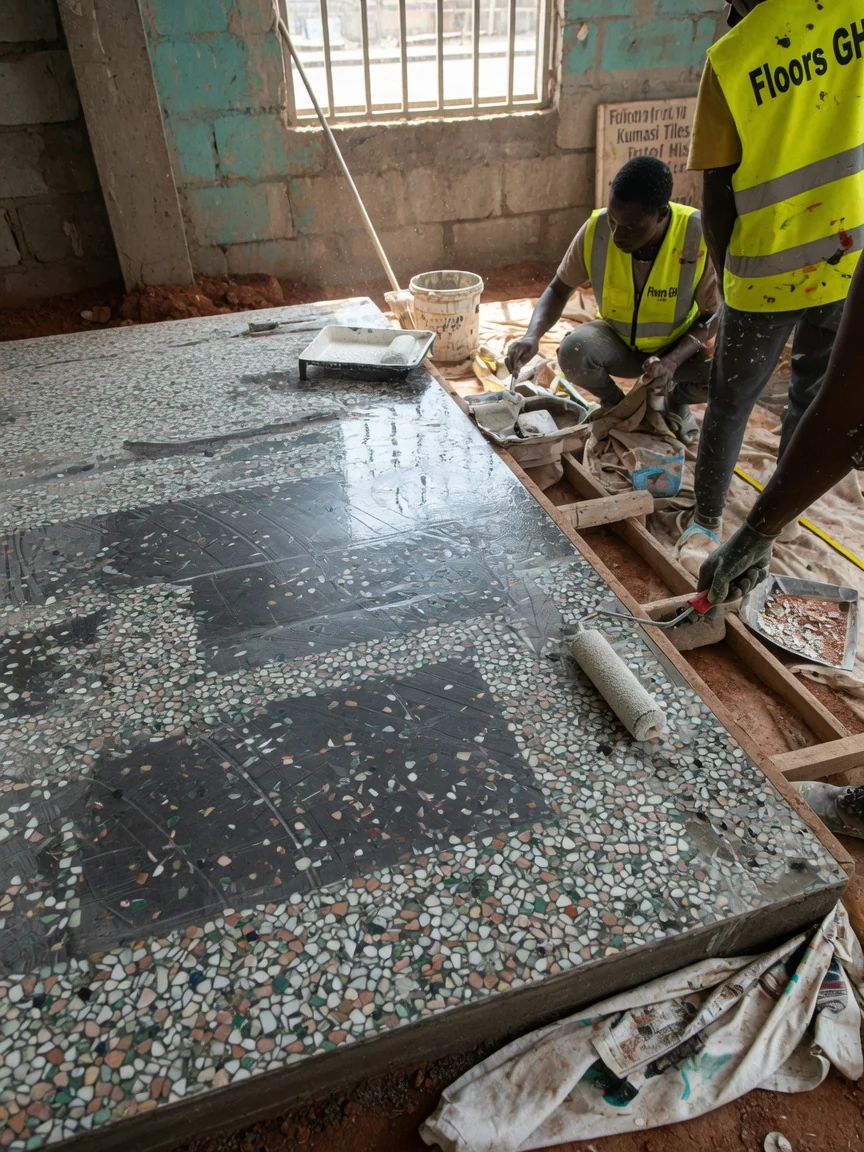
- Gâchage de la matrice et coulage par champ — matrice cimentaire ou époxy au dosage NTMA, coulée champ par champ dans la trame des bandes ; vibrée pour minimiser les vides.
- Durcissement, ponçage diamant et polissage progressif — ponçage diamant croisé du grossier au fin, durcisseur, polissage au brillant spécifié et scellement.
Comparaison du terrazzo avec d’autres sols premium pour le climat tropical
| Système | Idéal pour | Durée de vie | Renouvelable sur place |
|---|---|---|---|
| Terrazzo cimentaire | Grands champs institutionnels, restauration patrimoniale | 40+ ans | Oui — re-ponçage et re-polissage |
| Terrazzo époxy | Commercial, vitrines phares, budget d’épaisseur serré | 30+ ans | Oui — re-ponçage et re-polissage |
| Marbre | Halls bancaires/d’ambassade, espaces cérémoniels | Décennies | Adoucissage seul — non re-coulé |
| Béton poli | Showrooms, arrière-boutiques zonées | 20+ ans | Oui — re-polissage |
Ce qui influe sur le coût
- La matrice spécifiée (cimentaire ou époxy) et l’épaisseur du revêtement
- La spécification du granulat — éclats de marbre standard jusqu’à la nacre, le verre concassé ou la pierre régionale sur mesure
- Le matériau des bandes (laiton, zinc, aluminium) et la densité du motif
- Le grain de finition — utilitaire, institutionnel ou brillant miroir
- L’état du support et toute remise à niveau de planéité ou d’humidité requise
Chaque devis suit une étude de site et une évaluation du support — aucun tarif fixe n’est donné avant de vérifier la dalle.
Applications à travers le Ghana
- Champs de hall et de salle de bal d’hôtel où la composition du granulat porte l’identité de la marque — Accra centre, East Legon
- Atriums de musées, galeries et institutions culturelles
- Cours de réception de sièges sociaux et ministériels
- Sols publics d’aéroports, de gares et de bâtiments gouvernementaux à forte occupation et longue durée de cycle
- Restauration de terrazzo patrimonial à Cape Coast, et commandes premium à Accra, Cantonments et East Legon au Ghana
Zones desservies
Floors GH pose du terrazzo décoratif à Accra et à travers le Ghana — de Tema et Kumasi à Cape Coast et Takoradi.
Services connexes
- Pose de marbre — pierre naturelle book-matched pour halls institutionnels
- Béton poli — pour surfaces culturelles et arrière-boutiques zonées
- Chape autonivelante — préparation du support avant un coulage de terrazzo
- Restauration de parquet patrimonial — conservation des intérieurs patrimoniaux d’origine
Questions fréquemment posées
Quelle est la différence entre le terrazzo cimentaire et époxy ? Le terrazzo cimentaire (matrice à base de ciment Portland) est le système traditionnel, plus épais, adapté aux grands champs institutionnels et à la restauration patrimoniale ; le terrazzo époxy (matrice résine) est plus fin, à durcissement rapide, moins perméable, avec une plus grande clarté du granulat et une gamme de teintes plus large. Les deux sont posés selon les méthodes NTMA sur un support correctement préparé.
Pourquoi un terrazzo fissure-t-il et comment l’éviter ? Un terrazzo fissure lorsque le support bouge et que le revêtement n’a pas de ligne de rupture maîtrisée. La prévention passe par des bandes de séparation posées selon le calepinage recommandé par la NTMA — qui localisent le retrait et le mouvement du support à la bande plutôt qu’à travers le champ — sur une dalle saine, plane et correctement préparée.
Quelle est la durabilité d’un terrazzo dans un espace public à fort trafic ? Un terrazzo correctement posé dure des décennies en service institutionnel à forte occupation ; la résistance à l’abrasion est vérifiée selon ASTM C779, et la surface se renouvelle par re-ponçage et re-polissage plutôt que par remplacement.
Combien coûte un terrazzo décoratif ? Le devis se fait sur étude — le coût varie selon la matrice, la spécification du granulat, le matériau des bandes, le grain de finition, la surface et l’état du support. Nous ne donnons jamais de tarif fixe avant d’avoir étudié la dalle ; demandez une étude de site.